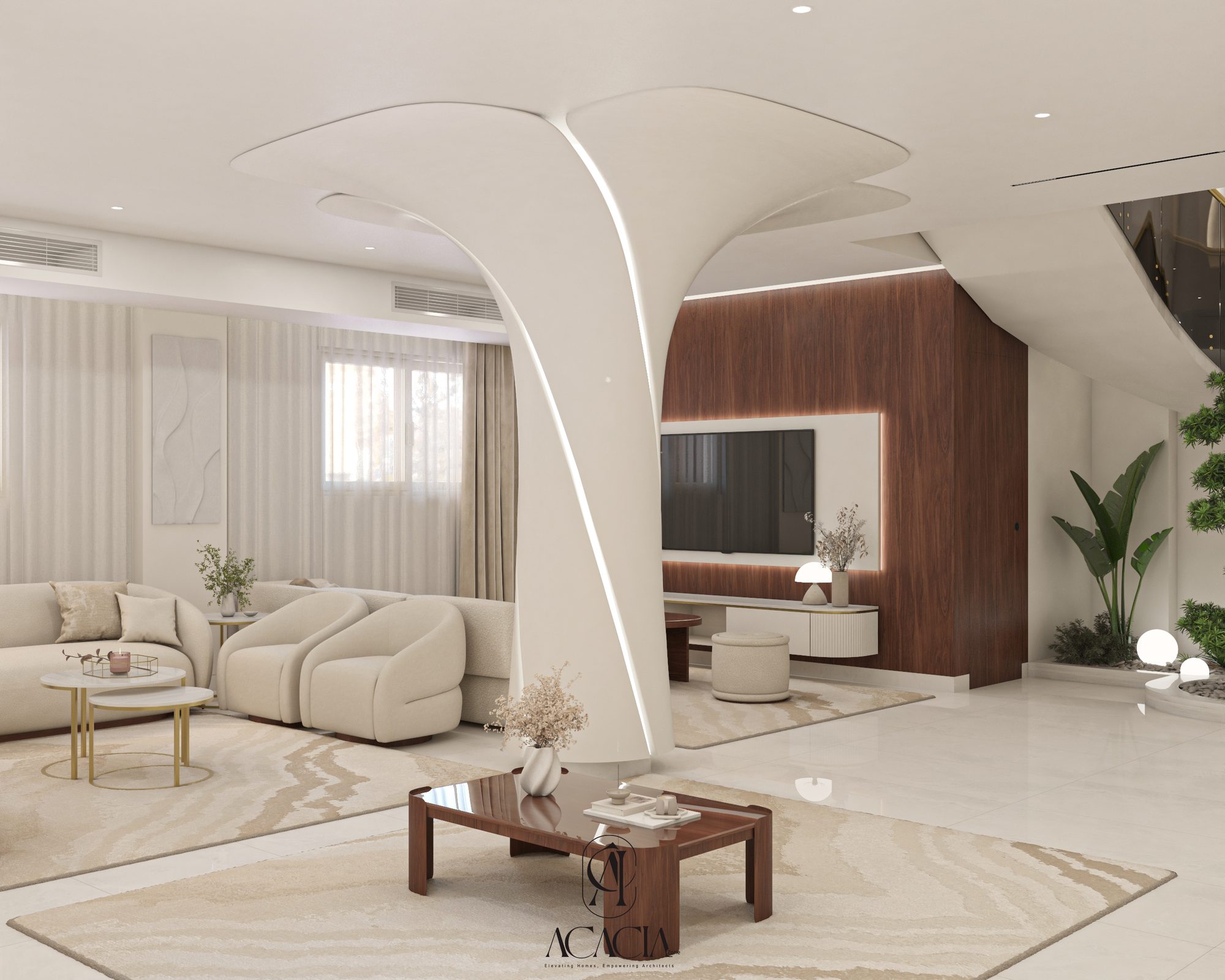
Lakes View started with a simple brief: a 300 square meter duplex that didn't feel like two floors stacked on top of each other, and a family who wanted warmth without giving up on drama. What we ended up with is a home organized around one continuous gesture — a sweeping staircase that pulls light and movement down through both levels, and a material palette disciplined enough to let that gesture read clearly in every room.
Built From the Foundation, Not Just the Interior
Lakes View sits inside a five-floor residential building, with one full-floor unit per level, and Acacia Zone's scope on this project started well before the duplex interior did. We delivered the building's foundation work along with the full electrical and plumbing riser system — the vertical shafts that distribute power and water to every floor — before a single wall of the duplex interior went up.
It's the kind of scope that rarely makes it into a portfolio, since it isn't the part anyone photographs. But it's exactly why the interior work could move as cleanly as it did — by the time design and fit-out began, the building's core infrastructure was already resolved and in place. It's also why electrical & plumbing foundations are now one of our standing services for residential and commercial buildings, not just a one-off on this project.
Starting With the Stair, Not the Rooms
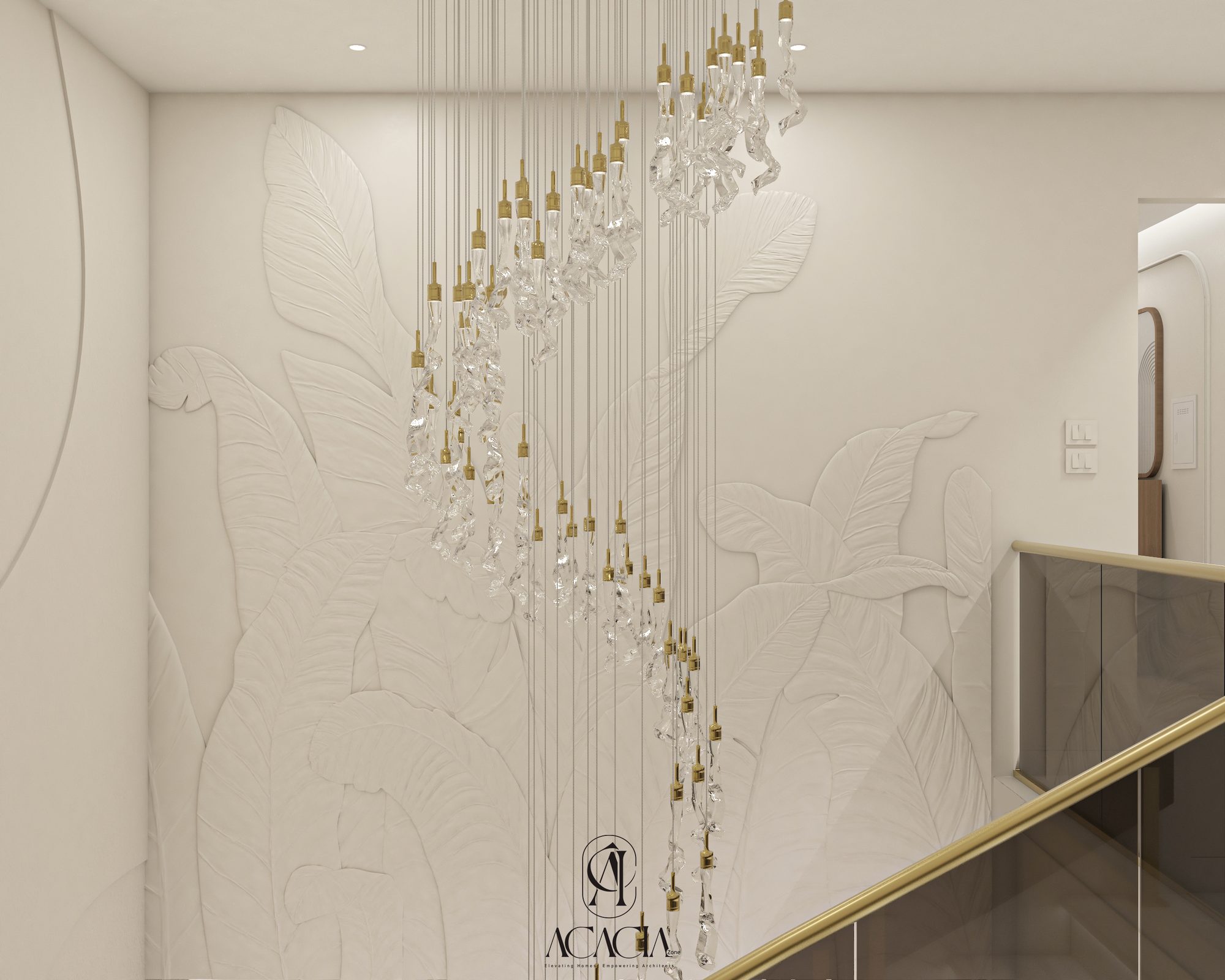
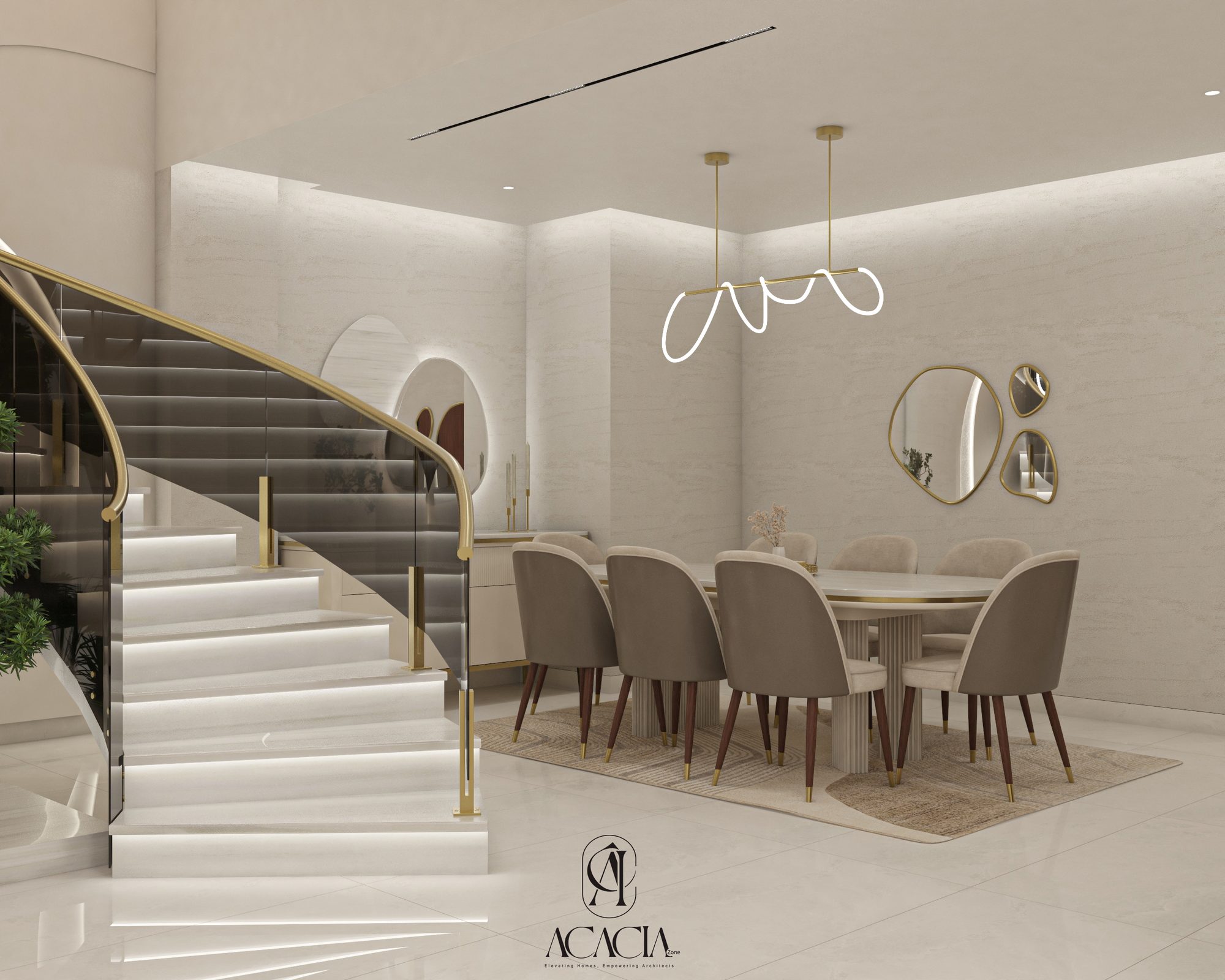
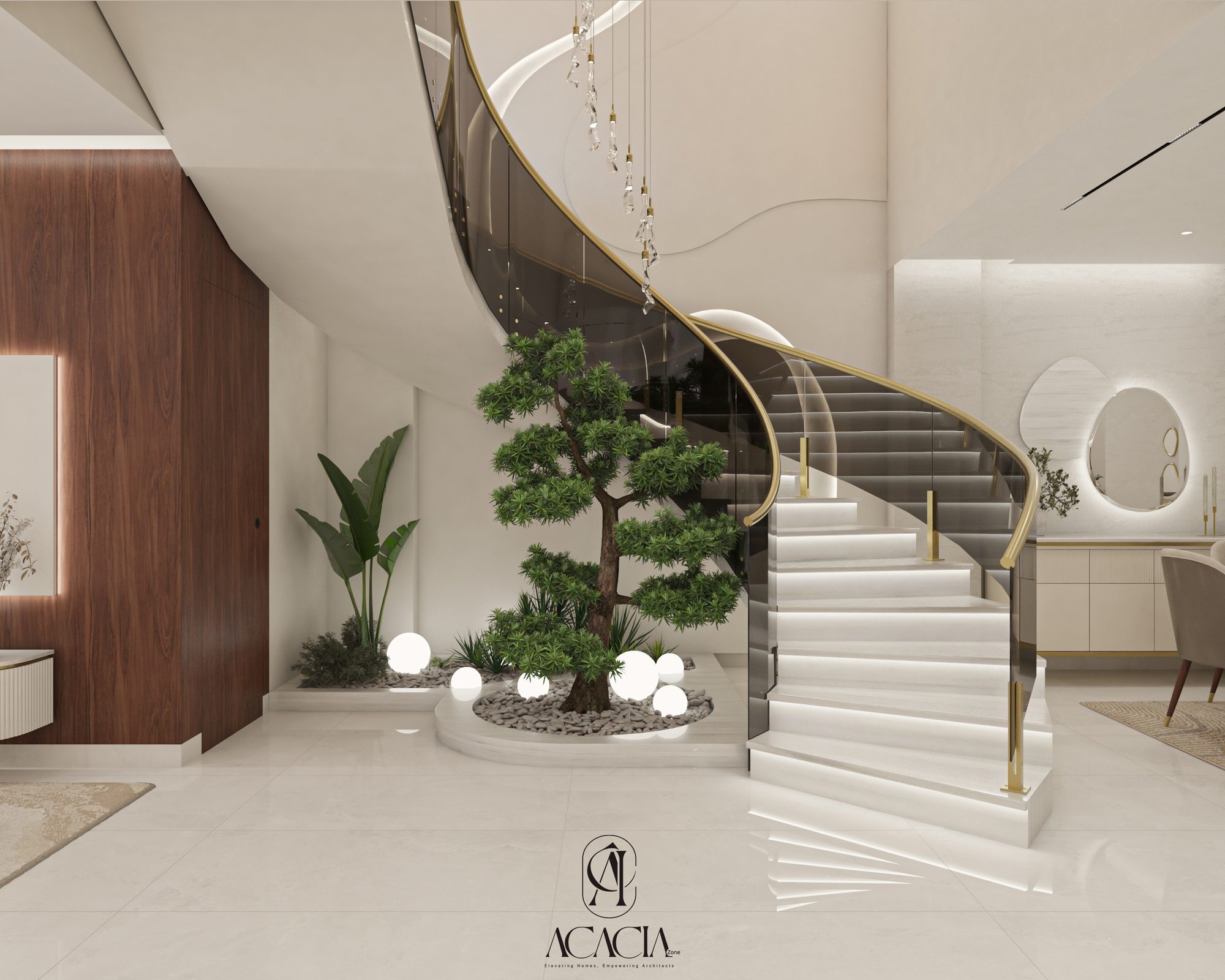
Most duplex layouts treat the staircase as circulation — a connector between two separate briefs. We treated it as the spine of the project instead. The glass-and-brass balustrade curves through the full height of the house, and everything else, from the entry console to the upstairs landing, was positioned to be seen from that stair, not just arrived at by it.
A cascading crystal-and-brass pendant follows the stair down through the double-height void, so the fixture reads differently from every landing — a detail, a reflection, or a full composition, depending on where you're standing.
A Palette That Had to Do the Heavy Lifting
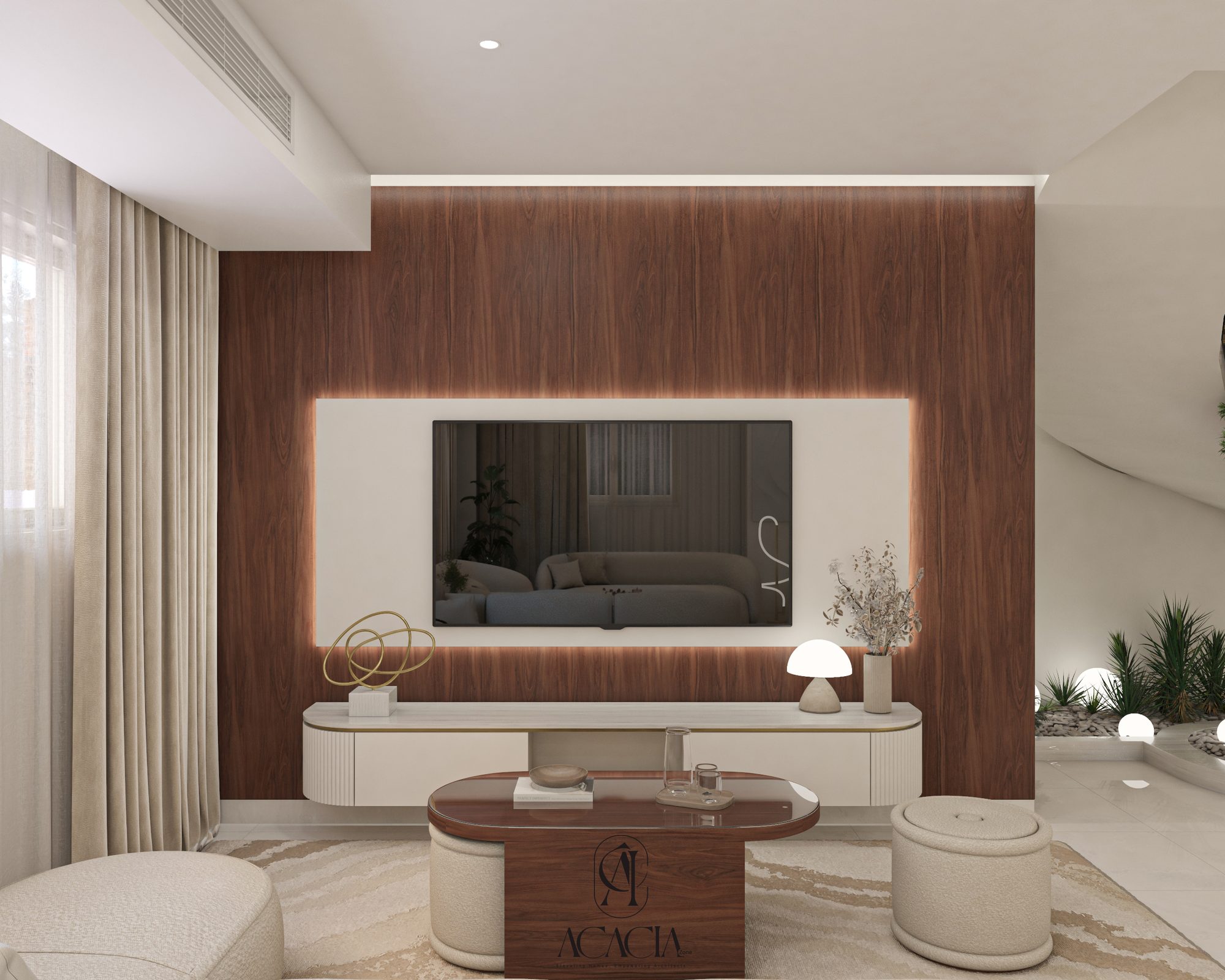
With a shape this expressive, the material palette needed to hold still. We kept the whole project to warm cream, walnut, and brushed brass — no competing accent colors, no secondary metal finish. That restraint is what lets the curved forms — the stair, the egg-shaped mirror cluster in the dining room, the rounded boucle sofas — feel considered rather than busy.
Reeded walnut millwork appears throughout as the one recurring texture: on the TV wall unit, framing the entry console, and along cabinetry edges. It's a quiet way of tying rooms together without repeating a single hero piece in every space.
Biophilic Details, Used Sparingly
Under the stair, a small bonsai courtyard sits in a bed of pebbles, lit by a scatter of low glowing orbs. It's a tiny gesture — a few square meters at most — but it's the moment most people photograph first when they walk in. We find that the smallest biophilic interventions tend to do more work than large indoor gardens, precisely because they're unexpected in a tight space like a stair landing.
The goal wasn't to fill Lakes View with plants — it was to give the house one green moment that felt inevitable, not decorative.
What We'd Tell Anyone Planning a Duplex
- Design the vertical connection first. If the stair is treated as an afterthought, no amount of room-by-room styling will make two floors feel like one house.
- Pick fewer materials, not more. A curved, expressive form needs a disciplined palette behind it or the whole space starts to compete with itself.
- Small biophilic details outperform big ones. One well-lit courtyard beats a hallway lined with planters.
Lakes View is fully documented in our portfolio, including the room-by-room gallery — see the full project for more photos of the living, dining, and entry spaces.